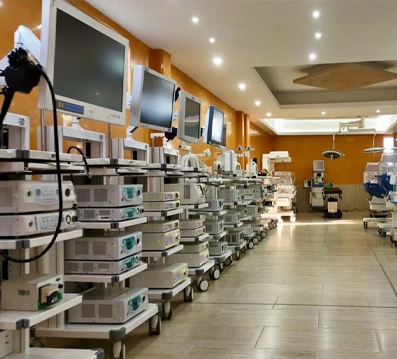
Medical equipment quality and economic issues, which are threatening the healthcare ecosystem and increasing the rising costs of health delivery, are now at the forefront of healthcare conversations. Medical equipment plays a big role in modern health care, providing advanced services and assisting professionals in carrying out clinical procedures, from just recording vital signs to diagnostic testing and patient rehabilitation. Medtrade Systems understands that proper selection of medical equipment is important, quality conformities are followed, appropriate handling is exercised, and equipment use is safe when administered by trained health personnel.
It is for this reason that the day-to-day operations of hospitals, clinics, nursing homes, and other healthcare providers depend on purchasing medical equipment. Not only products, but policymakers must also consider factors like intended use, dependability, operating costs, and the overall cost, not just the upfront cost, when it comes to software. With an idea gleaned from their clinical needs and the appropriate goods, healthcare providers in Delhi-NRC can save dozens, if not hundreds, of rupees. In addition, this guide will help the reader to evaluate the medical equipment, drill it for problems and select the best procurement decisions.
1. Why Medical Equipment Quality Matters in Healthcare
Choosing the right medical equipment can enable healthcare professionals to deliver tasks that require routine and cost-effective utilisation of healthcare services. It enables working consistently through clinical workflows.
The following factors are central to consideration in making the right decision:
A seamless operation: For day-to-day use, equipment that fulfills all required specifications (as suggested by the manufacturer) is most reliable when it’s configured and kept in optimal condition.
- Patient safety: Utilizing good equipment selection, staff training, and routine inspections can lower preventable problems.
- Effective workflows: Functional equipment and supplies that are readily available eliminate non-productive interruptions.
- Better resource planning: This helps avoid inappropriate purchases by choosing products in line with actual clinical needs.
- Persistent value: Maintenance requirements, consumable price, warranty coverage, and availability of replacement parts also need to be weighed up against the initial price.
Thus, quality should be measured through the product fit, relevant documents, applicable safety requirements, and conditions recommended by the manufacturer.
2. How Medical Equipment Supports Patient Care
Healthcare professionals are responsible for evaluating patients using a set of relevant skills, correct techniques, and accurate medical resources. Improved medical devices can accomplish these duties–for example, providing measurements, assisting with specific procedures, or helping clinicians keep tabs on patients who they are testing.
Examples of these systems include patient monitoring systems which show selected physiological metrics; an ECG measuring the heart’s electrical activity; OT lights to light up the surgical field; and hospital beds to position and comfort patients. The stated purpose, normal operation, and clinical fit must be right for it to be helpful. Devices should not replace professional judgement or the success of a therapy.
Facilities must consider clinical usage information and make a careful evaluation of each product before purchasing it.
3. Essential Medical Equipment for Hospitals and Clinics
The products required by one healthcare facility to another will vary with the services it aims to offer, the people it sees, and the infrastructure it has.
Here are some standard equipment categories and associated purchasing considerations.
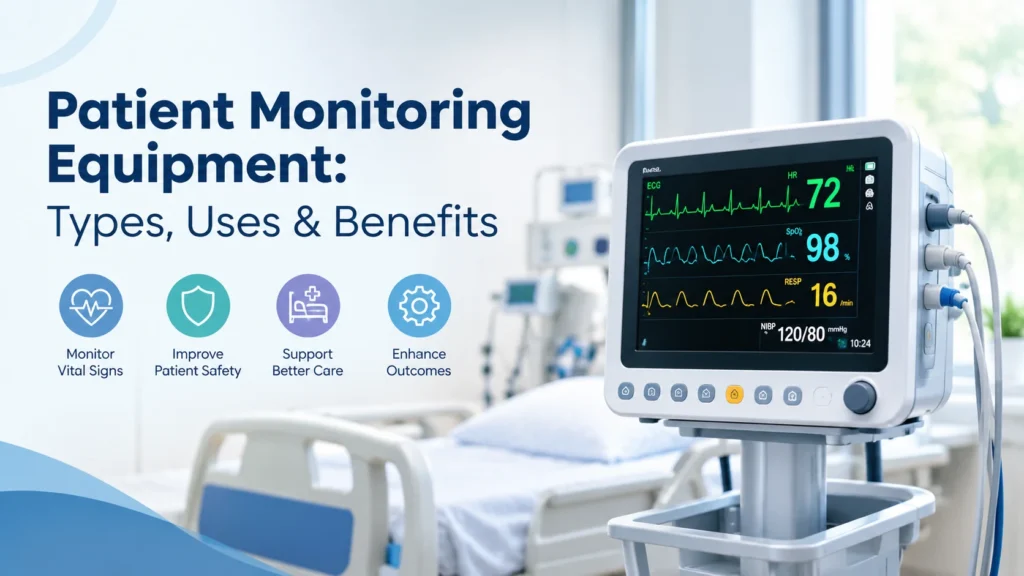
Patient Monitoring Systems
Patient monitoring systems allow healthcare professionals to record selected physiologic parameters. Depending on the model, they may measure things like heart rate, blood pressure, oxygen saturation, and respiratory rate.
Healthcare facilities need to consider the following before buying a patient monitor:
- Device parameters being monitored.
- Device features suited to the intended clinical scenario.
- Good display, alarm functions, and operating needs.
- Sensor availability and compatibility.
- Maintenance, calibration, and technical support demands.
Once again, the configuration you need will be based on the individual patient’s needs and the relevant clinical protocols of the facility to be supplied.
ECG Machines
An electrocardiogram (ECG) machine measures the cardiac electrical activity. This equipment is used in clinical settings for cardiac assessment when indicated.
The number of channels, recording and display features, paper or digital output options, connectivity, and offerings of compatible electrodes and accessories should be considered while buying. Staff must also be trained on proper electrode placement and operation of the device. It’s not enough to simply dress up a model with the most features; the device’s features need to be in sync with the intended use of the facility.
OT Lights
Operating theatre lights are used to provide illumination sufficient for a surgical procedure and other clinical procedures. Sufficient lighting is what professionals in the field require to see the work area.
Key selection factors include illumination performance, adjustability, mounting configuration, service accessibility, heat management, and operating theatre layout compatibility. Prior to procurement, hospitals must confirm specifications and installation prerequisites are met.
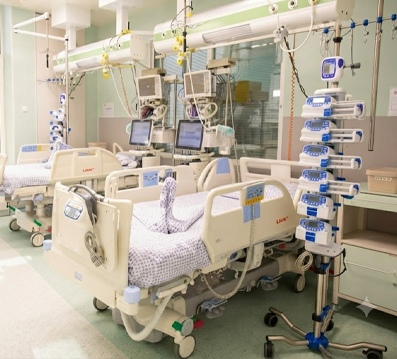
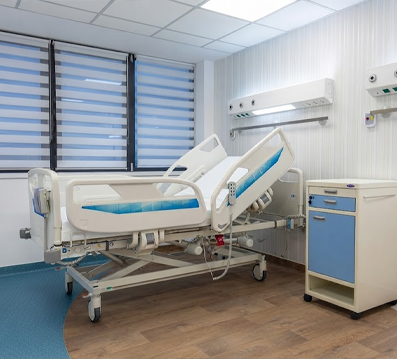
Hospital Beds
Hospital beds help patient positioning and nursing activities and give support to patient during their care and recovery. Various adjustment mechanisms and features are found in various models.
- When comparing hospital beds, consider:
- Manual or electric adjustment options
- Safe working load and bed dimensions.
- Side rails, brakes, and other safety features.
- Mattress compatibility and ease of cleaning.
- Availability of replacement components and maintenance support.
The correct choice between beds and the bed department might be harder for the patient to decide upon.
4. How the Right Equipment Improves Hospital Efficiency
Hospital operations are efficient. Hence, hospital operation goes beyond just having high-tech devices; it also depends on equipment availability, staff competency, inventory control, maintenance processes, and other five details that shape day-to-day operations.
To better manage equipment in healthcare facilities, adopt these practices:
Which equipment to acquire – Identify which therapies a practice uses, and which will dictate all the devices required to support it.
Avoid unplanned service disruptions; in every case, improve efficiency by taking advantage of efficiencies wherever possible. Artifacts suggestion to discover below based on the recommendation given by the manufacturer for safety of use.
- Consumables: Review supplies to set reorder limits for items with high demand.
- Where possible, standardise: Unified equipment standards and protocols make training and IT management easier.
- Get clinicians authorised for training: These teams must be familiar with limits of procedures, usage, cleaning and safety protocols.
- Equipment performance logs: Keep records of faults, service activity, and ongoing operational challenges to provide insight into future purchases.
With resources used efficiently, healthcare organisations can reduce service disruptions ahead of time.
5. How to Choose a Medical Equipment Supplier
Choosing a medical equipment supplier has to be done after checking if the product is relevant and assessing how reliable the procurement procedure is. It can be helpful if healthcare facilities request transparent product information and put competing suppliers through the same criteria.
Factors to consider before placing an order:
- Product specifications: Verify the product is in line with required technical and clinical needs
- Documentation: Go through manuals, warranty terms, traceability information, and certifications or regulatory paperwork, if applicable.
- Compatibility: Verify if the necessary accessories and consumables are compatible with the equipment you buy from the vendor.
- Pricing: Obtain quotes with services and accessories similar to each other for better comparison.
- Availability: Verify stock status, order quantity, and you need to arrive time
- After-sales support: Enquire about service plans and availability of technical support and replacement parts, if applicable.
Healthcare facilities looking for a medical equipment supplier in Delhi NCR should choose each supplier as well as they are looking for. And those who buy in New Delhi, Ghaziabad, Noida, Greater Noida, and Haryana should confirm the delivery conditions in their respective locations.
Medtrade Systems is a tradesman (trader) and retailer of hospital machines, medical equipment, and hospital furniture. Interested healthcare buyers may review the company’s About Us page to learn more about its declared product line-up and methodology.
6. A Practical Medical Equipment Purchasing Checklist
Medical equipment suppliers are checked off with this superstition at the time of a medical equipment or supply purchase:
- Clinical necessity: Does the product have the desired application?
- Technical specifications: Does it satisfy the facility’s everyday clinical expectations?
- Safety and documentation: Are the necessary documents and directions on hand?
- Compatibility: Can it work with the current apparatus and accessories?
- Maintenance: What needs to be included in the maintenance schedule (inspection, cleaning, calibration, repair)?
- Availability: Does the supplier have the quantity of goods needed in time?
- Total cost: Have launch costs, maintenance, install and replacement included, where procurement needs?
- Staff Training: Will all users of the equipment be able to safely and correctly use it?
- Warranty and support: Are the coverage terms and support arrangements clear?
Using the same checklist for each supplier simplifies comparative analysis for procurement teams and helps them avoid making decisions based only on price.
7. Medical Equipment Maintenance and Inventory Management
Equipment has to be carefully used and properly maintained. Improper storage, skipped maintenance, damaged components, or wrong use may compromise or deny the performance of devices down the line. For checking, cleaning, storing, maintaining, and replacing equipment, healthcare facilities should have written instructions in place. Always follow the manufacturer’s instructions for service and calibration. If you think a device may be damaged or not working in the warning order of your operations, have authorised personnel check it before you reinstall it.
Good stock control also plays a role. Procurement teams should keep inventory records current, note expiry dates where relevant, and keep a running inventory of usage trends highlighting items that come up as high items contingent upon demand. A trustworthy inventory method can reduce waste, stop the ordering of unnecessary supplies, and protect important reserves. The procedures should reflect the equipment in use and the day-to-day demands of the facility.
8. Planning Medical Equipment and Hospital Furniture Together
Planning or improving a healthcare facility must consider both equipment and furnishings. Patients and staff teams need to be able to access the site’s layout and have room for proper work, plus cleaning and maintenance on a routine basis.
When choosing a bed to serve in a hospital, staff would think to take into account the state of design, durability, procurement, patient experience, and departmental needs. For example, a bed in a hospital should be as small as feasible but still capable enough to secure staff’s ability to work safely in the space provided.
Before making decisions on secondary fixtures, the working environment of health care facilities as a whole must be examined to ensure that accessories selected are proper for the intended space and oriented in line with daily uses of the institution.
9. Finding Suitable Medical Equipment in Delhi NCR
Practices of procurement of medical equipment also vary among hospitals, clinics and nursing homes. Which types of diagnostic systems and how many pieces to purchase depends entirely on the size of the operation. Smaller clinics might adopt the most necessary diagnostic equipment, but larger hospitals may need to arrange for a variety of machines, compatible accessories and a planned supply schedule.
Collect all the required products, quantities, technical specifications and delivery expectations before asking suppliers for quotes. It may also be useful to request clarification from suppliers regarding warranty details, product documentation and maintenance arrangements. For some background on equipment selection and patient care, also have a look at How Medical Equipment Improves Patient Care. Healthcare facilities can then compare the options available with their requirements and confirm all sorts of details are correct before ordering.
Conclusion
However, to buy the correct medical device, it is important to assess the clinical requirements, technical specifications, safety documentation, maintenance, and total cost. Proper purchasing and management practices allow healthcare professionals to use technology more efficiently, thereby providing you with better equipment availability and more organized daily operations in healthcare settings.
In Delhi NCR, healthcare providers should prioritise product fitment and reliable procurement over just the cost. Hospitals and clinics can use the same evaluation sheet on all of their medical equipment and properly maintain their tools and plan their inventory better.
Check the Medtrade Systems home page or get in touch for questions about product availability or relevant health supplies